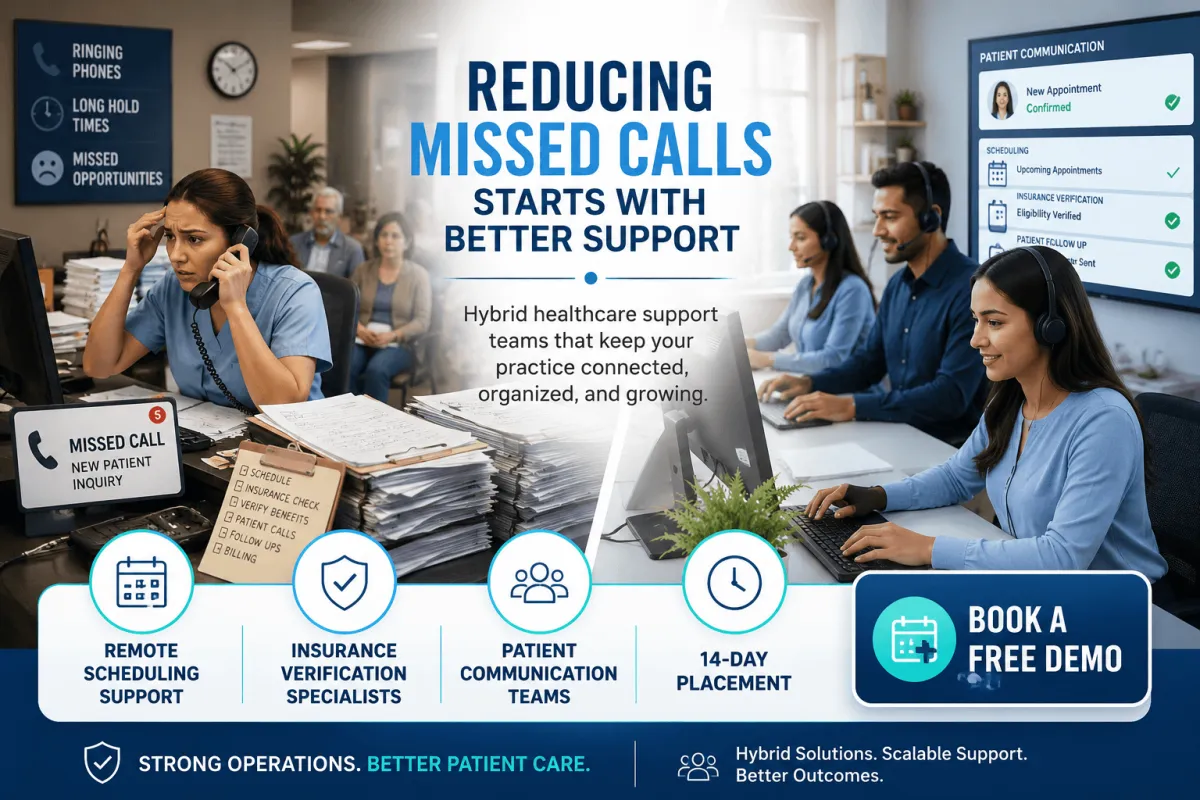
Reducing Missed Calls in Clinics: Complete Guide for Healthcare Practices
Every missed call in a healthcare practice represents more than just a missed conversation—it can mean a missed appointment, a delayed treatment, a dissatisfied patient, or lost revenue.
As patient expectations continue to rise, clinics face increasing pressure to answer calls promptly while managing scheduling, insurance verification, patient follow-ups, billing inquiries, and day-to-day operations. Unfortunately, many front desk teams are already stretched thin.
The result?
Missed patient calls
Longer hold times
Scheduling delays
Staff burnout
Reduced patient satisfaction
Lost revenue opportunities
This is why more healthcare organizations are adopting hybrid healthcare support models to improve responsiveness without increasing in-house administrative burden.
Why Clinics Miss Calls
Most clinics don't miss calls because of poor service.
They miss calls because administrative teams are overwhelmed.
Common causes include:
High Call Volumes
Patients call for:
Appointment scheduling
Rescheduling requests
Insurance questions
Prescription inquiries
Follow-ups
Billing concerns
Even a well-trained front desk team can struggle during peak hours.
Staffing Shortages
Healthcare staffing challenges continue to affect practices nationwide.
When one team member is absent or leaves the organization, remaining staff often absorb additional responsibilities, increasing the likelihood of missed calls.
Administrative Overload
Front desk personnel frequently juggle:
Patient check-ins
Scheduling
Insurance verification
Documentation
Phone support
When multiple priorities compete for attention, incoming calls often go unanswered.
The Hidden Cost of Missed Calls
Many clinics underestimate the financial impact of missed patient communication.
A missed call can result in:
Lost appointments
Reduced patient retention
Negative online reviews
Lower referral rates
Reduced lifetime patient value
For growing practices, even a small percentage of unanswered calls can represent thousands of dollars in lost revenue every month.
How Hybrid Healthcare Support Teams Help
A hybrid healthcare support model combines on-site clinical staff with dedicated remote healthcare administrative professionals.
These teams function as an extension of the practice and can assist with:
Appointment Scheduling
Remote coordinators can manage incoming appointment requests, rescheduling, cancellations, and calendar optimization.
Insurance Verification
Dedicated specialists can verify patient benefits before appointments, reducing delays and administrative bottlenecks.
Patient Communication
Hybrid teams can support:
Appointment reminders
Follow-up calls
Patient outreach
Intake coordination
Referral management
Overflow Call Handling
When front desk staff are busy assisting patients in person, remote support teams can answer incoming calls and ensure no patient inquiry goes unanswered.
Benefits of a Hybrid Staffing Model
Healthcare practices adopting hybrid administrative support often experience:
Improved Patient Experience
Patients receive faster responses and shorter wait times.
Reduced Staff Burnout
In-house teams can focus on patient-facing responsibilities rather than managing excessive administrative workloads.
Better Operational Efficiency
Administrative tasks are distributed more effectively across dedicated support teams.
Increased Revenue Opportunities
By reducing missed calls and improving scheduling efficiency, clinics can capture more appointments and improve patient retention.
Why More Clinics Are Exploring Hybrid Solutions
Healthcare leaders increasingly recognize that growth requires scalable operational support.
Rather than continuously expanding in-house administrative teams, many organizations are supplementing existing staff with remote healthcare specialists who provide scheduling, patient communication, insurance verification, and operational support.
This approach allows practices to improve service levels while maintaining operational flexibility.
How StaffWiz Supports Healthcare Practices
At StaffWiz, we help healthcare organizations build hybrid support teams that integrate seamlessly into existing workflows.
Our healthcare support professionals can assist with:
Appointment scheduling
Insurance verification
Patient communication
Administrative support
Medical billing assistance
Back-office operations
Our goal is simple:
Help practices reduce administrative overload, improve patient experiences, and create more efficient clinic operations.
Frequently Asked Questions
How do clinics reduce missed patient calls?
Clinics can reduce missed calls by implementing dedicated call handling processes, improving scheduling workflows, and utilizing hybrid healthcare support teams to manage overflow communication and administrative tasks.
What is a hybrid healthcare staffing model?
A hybrid healthcare staffing model combines on-site staff with remote healthcare administrative professionals who support scheduling, patient communication, insurance verification, billing, and other operational functions.
Can reducing missed calls improve clinic revenue?
Yes. Missed calls often lead to missed appointments and lost patient opportunities. Improving responsiveness can increase appointment volume, patient retention, and overall revenue.
What healthcare tasks can be handled remotely?
Common remote healthcare support functions include appointment scheduling, insurance verification, patient communication, referral coordination, billing assistance, and administrative support.
Ready to Improve Clinic Operations?
Reducing missed calls isn't just about answering the phone—it's about creating a patient experience that supports growth.
If you're looking to improve scheduling efficiency, reduce administrative burden, and enhance patient communication, a hybrid healthcare support model may be the right solution.
Book a free healthcare operations consultation:
https://staffwiz.com/book-a-call-wiz


