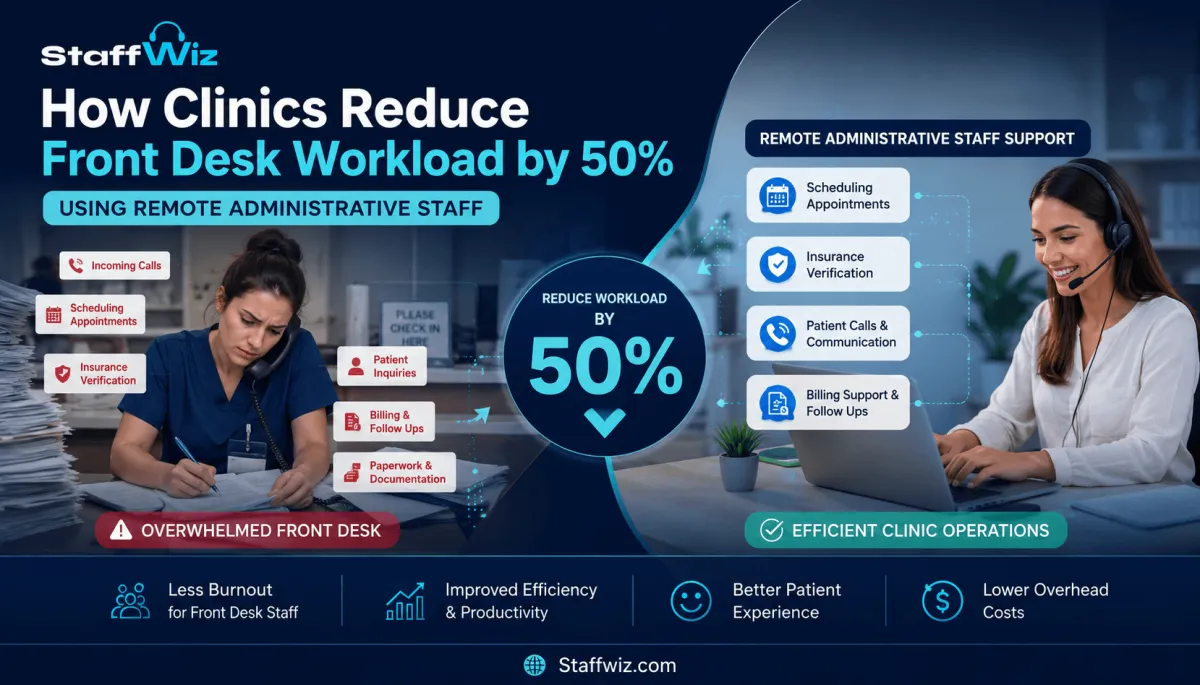
How Clinics Reduce Front Desk Workload by 50% Using Remote Admin Staff
Healthcare practices are facing a growing challenge.
Front desk teams are being asked to do more than ever before.
Between answering phones, scheduling appointments, verifying insurance, processing paperwork, handling patient inquiries, and supporting providers, many front desk employees are stretched beyond capacity.
The result?
Missed calls
Delayed insurance verification
Staff burnout
Scheduling bottlenecks
Frustrated patients
To address these challenges, many clinics are turning to remote administrative staff.
When implemented correctly, remote support can reduce front desk workload by up to 50%, allowing onsite teams to focus on patient care while improving operational efficiency.
In this guide, we'll explore how healthcare practices are using remote administrative professionals to streamline operations and support growth.
Why Clinic Front Desks Are Overwhelmed
The traditional front desk role has evolved dramatically over the past decade.
What was once primarily a scheduling and reception position has become a central hub for nearly every administrative function in a clinic.
Today's front desk staff often handle:
Appointment scheduling
Patient intake
Insurance verification
Eligibility checks
Billing questions
Referral coordination
Medical records requests
Phone calls
Appointment reminders
Patient communication
Many practices rely on one or two employees to manage all of these responsibilities simultaneously.
As patient volumes increase and insurance requirements become more complex, administrative demands continue to grow.
This operational pressure creates several challenges:
Increased Patient Wait Times
When staff are constantly switching between tasks, patient interactions become slower and less efficient.
Higher Burnout Rates
Administrative overload is one of the leading causes of employee stress and turnover in healthcare support roles.
Lost Revenue Opportunities
Missed calls often mean missed appointments and missed opportunities to serve new patients.
Reduced Patient Satisfaction
Patients notice delays, long hold times, and communication gaps.
Over time, these issues can affect a practice's reputation and growth.
Tasks That Can Be Handled Remotely
One of the biggest misconceptions in healthcare is that all administrative work must be completed onsite.
In reality, many front desk responsibilities can be performed effectively by trained remote administrative professionals.
Common remote support functions include:
Appointment Scheduling
Remote staff can:
Schedule new patient appointments
Manage cancellations
Coordinate provider calendars
Confirm appointments
Insurance Verification
Remote specialists can:
Verify eligibility
Confirm benefits
Check coverage details
Document insurance information
Patient Calls
Remote administrative professionals can:
Answer incoming calls
Return voicemails
Handle appointment inquiries
Provide administrative support
Billing Support
Remote team members can assist with:
Patient billing questions
Payment follow-up
Claims status inquiries
Documentation management
Referral Coordination
Many clinics utilize remote staff to:
Process referrals
Track authorization requirements
Coordinate with specialists
By moving these administrative responsibilities offsite, clinics allow onsite staff to focus on patients and in-person interactions.
Real Workflow Examples
Let's look at how remote administrative support works in practice.
Example 1: Busy Primary Care Clinic
Before
One front desk coordinator handles:
Patient check-ins
Scheduling
Insurance verification
Incoming calls
Result:
Long hold times
Delayed insurance checks
Staff stress
After
Remote administrative staff manage:
Scheduling
Insurance verification
Patient calls
Onsite staff focus on:
Patient check-in
Patient support
Provider coordination
Result:
Faster service
Reduced workload
Improved patient experience
Example 2: Specialty Practice
Before
Staff spend several hours daily verifying insurance and processing referrals.
Result:
Delayed patient scheduling
Administrative bottlenecks
After
Remote support handles:
Insurance verification
Referral processing
Documentation follow-up
Result:
Faster approvals
More efficient workflows
Better staff productivity
Cost Comparison
One of the most common questions clinic owners ask is:
"How does remote administrative support compare to hiring additional onsite staff?"
Consider the typical costs associated with an onsite administrative employee:
Onsite Employee Costs
Salary
Payroll taxes
Benefits
Paid time off
Equipment
Workspace
Recruiting costs
Training costs
The total investment often exceeds the base salary by a significant margin.
Remote Administrative Support
Remote staffing solutions can help clinics:
Scale support more flexibly
Reduce overhead expenses
Access trained professionals
Increase operational coverage
Most importantly, clinics gain administrative capacity without many of the costs associated with expanding onsite teams.
Implementation Roadmap
Successfully integrating remote administrative staff requires a structured approach.
Step 1: Identify Administrative Bottlenecks
Start by asking:
Which tasks consume the most staff time?
Where are delays occurring?
What activities create the most stress?
Common opportunities include:
Scheduling
Insurance verification
Patient calls
Step 2: Define Remote Responsibilities
Clearly establish:
Tasks handled remotely
Tasks handled onsite
Communication processes
Clear role definitions prevent confusion and improve accountability.
Step 3: Implement Workflow Processes
Create standardized procedures for:
Scheduling
Documentation
Escalations
Patient communication
Consistency is critical for long-term success.
Step 4: Train and Integrate
Ensure remote staff understand:
Clinic workflows
Scheduling procedures
Insurance processes
Communication standards
The goal is to create a seamless extension of your existing team.
Step 5: Measure Results
Track metrics such as:
Call answer rates
Scheduling efficiency
Insurance turnaround times
Staff satisfaction
Patient satisfaction
These indicators help measure the impact of remote support.
Final Thoughts
The administrative burden in healthcare isn't getting smaller.
As clinics continue to face staffing shortages, rising operational demands, and increasing patient expectations, finding smarter ways to manage front desk responsibilities has become essential.
Remote administrative staff offer a practical solution.
By shifting scheduling, insurance verification, patient calls, and other administrative tasks to trained remote professionals, clinics can reduce front desk workload, improve efficiency, and create a better experience for both patients and staff.
The result is a more scalable, sustainable, and patient-focused healthcare operation.
Ready to Reduce Front Desk Workload?
StaffWiz helps healthcare practices build high-performing remote administrative teams for scheduling, insurance verification, billing support, patient communication, and more.
Book a free strategy call today:
https://staffwiz.com/book-a-call-wiz


