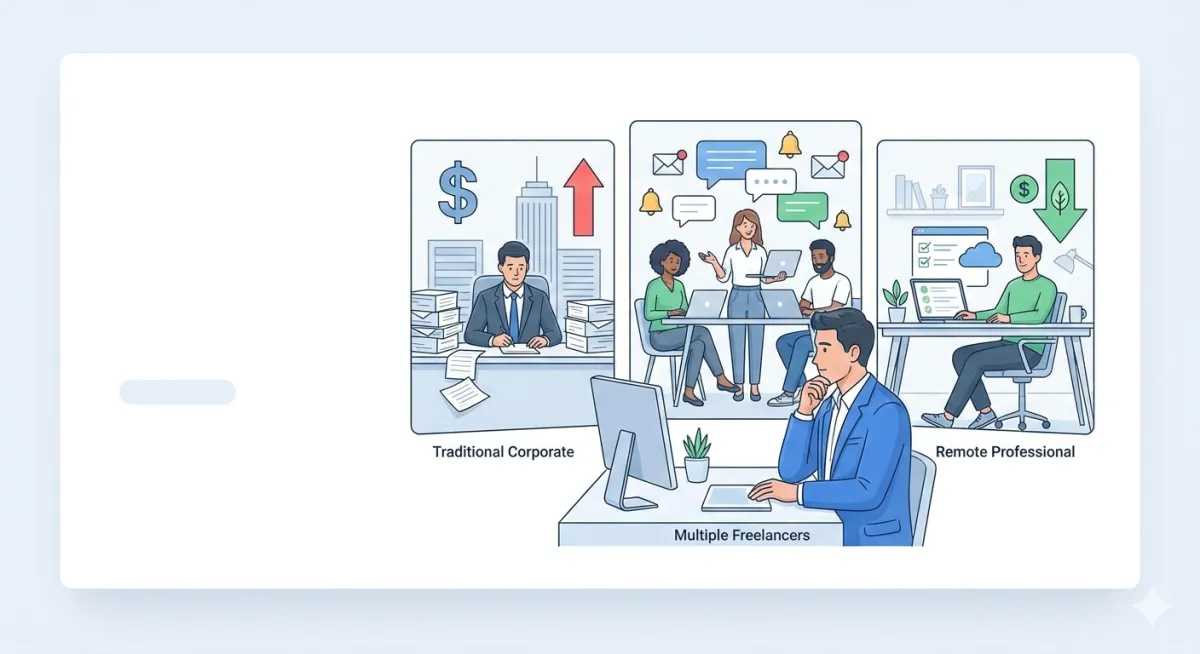
Local Hire vs Remote Talent vs Freelancers: The 2026 Cost Breakdown for Small Businesses
Hiring decisions in 2026 are no longer just about finding talent — they’re about finding the most efficient growth model. Small businesses and founder-led companies must balance cost, reliability, speed, and scalability.
This guide explains the true cost of hiring locally, working with freelancers, and hiring full-time remote managed talent, using realistic numbers, practical frameworks, and real-world scenarios — without complex tables so it’s easy to publish on any blog CMS.
The Real Monthly Cost Comparison (2026) — Simple Breakdown
✅ Local Hire
Base salary: $3,000–$5,000 per month
Add payroll taxes, benefits, equipment, office costs: +20%–35%
True monthly cost often becomes: $4,200–$6,750
Hiring timeline: typically 4–8 weeks
Requires ongoing HR and management effort
✅ Freelancers
Typical monthly spend across multiple freelancers: $2,500–$4,000
Individual freelancers may cost $800–$1,500 each
Hidden costs include retraining, replacing unreliable workers, and time spent coordinating
Hiring timeline: 1–3 weeks
Reliability varies depending on availability
✅ Full-Time Remote Managed Talent
Fixed monthly cost: $1,499
Payroll, HR, vetting, and compliance handled
Hiring timeline: 7–14 days
Minimal hidden costs
Designed for long-term operational ownership
👉 Many businesses save up to 70% on payroll, depending on role and location.
Why Founders Are Moving Away from Local Hiring
Hidden Local Hiring Costs
Beyond salary, local employees often require:
Payroll taxes and compliance handling
Health benefits and insurance
Paid leave and holidays
Office space and equipment
Recruitment fees and long hiring cycles
Simple example: If you hire someone at $4,000/month, the real business cost may exceed $5,200/month after overhead.
The Freelancer Trap: Cheap Upfront, Expensive Long-Term
Freelancers are great for short-term tasks, but daily operations usually need consistency.
Common Founder Complaints
Not available during business hours
Managing multiple freelancers takes time
Quality changes between projects
No ownership of ongoing processes
Real Scenario
A consulting firm hires:
Inbox virtual assistant → $800/month
Social media freelancer → $600/month
CRM updater → $500/month
Total spend: $1,900/month
Yet they still lack:
accountability
full-time availability
someone owning operations
After six months, they replace all three with one full-time remote operations assistant handling everything.
The Rise of Full-Time Remote Managed Talent
Managed remote hiring combines the benefits of local employees and freelancers without most downsides.
What’s Typically Included
Pre-vetted candidates
Skills testing before placement
Payroll and compliance handled
Ongoing HR support
Replacement guarantee if needed
This approach removes most risks founders worry about when hiring offshore.
Step-by-Step Framework: Choosing the Right Hiring Model
Step 1 — Identify the Work Type
Ask yourself:
Is this work needed every day?
Does it require long-term ownership?
Does it affect customers, leads, or revenue?
If the answer is YES → a full-time hire (local or remote) is usually better than freelancers.
Step 2 — Calculate Your Founder Hour Value
Example:
Founder value: $300 per hour
Time spent daily on admin: 2 hours
Workdays per month: 22
Lost productivity = $300 × 2 × 22 = $13,200/month
This shows hiring support is often a growth investment, not an expense.
Step 3 — Compare Hiring Speed
Local employee: productivity may take 6–10 weeks
Freelancers: typically 2–4 weeks to stabilize workflow
Managed remote talent: often ready within 7–14 days
Faster hiring = faster business growth.
Real Founder Case Study
Real Estate Investor Example
Problem: Inbox overload, missed leads, and slow follow-ups.
First attempt: Local admin hiring process
Interviewing lasted 5 weeks
Expected salary: $3,800/month
Final decision: Full-time remote admin placed in 12 days
Monthly cost: $1,499
Lead response time improved by 60%
Outcome: Closed two additional deals within 90 days thanks to faster responses.
What Roles Can Be Handled by Remote Talent?
Admin Support
Inbox management
Scheduling
Data entry
Sales Support
CRM updates
Lead outreach
Appointment booking
Customer Support
Chat responses
Ticket handling
Phone assistance
Operations & Marketing
Project tracking
Reporting
Social media scheduling
FAQs Founders Actually Ask
Is remote hiring safe for my business?
Yes. Managed hiring providers handle contracts, payroll, and compliance, reducing risk significantly.
Will performance drop compared to local staff?
For admin, support, and operational roles, many founders report equal or better performance.
How quickly can someone start?
Most businesses can hire within 7–14 days after defining the role.
What if the hire doesn’t work out?
Managed services generally include replacement support.
Do I need to manage payroll or employment laws?
No — these are handled by the provider.
Final Verdict: Which Hiring Model Wins in 2026?
Need long-term reliable daily support → Remote managed talent
Need short one-time project help → Freelancer
Need physical onsite presence → Local hire
For most founder-led businesses today, full-time remote managed hiring provides the best balance of cost, speed, and reliability.
Ready to Scale Without Payroll Headaches?
See how founders hire full-time remote admin & operational staff in just 14 days — fully managed and ready to work.


